
Power without limits devours thought, capital, and talent. And that’s how civilizations die.
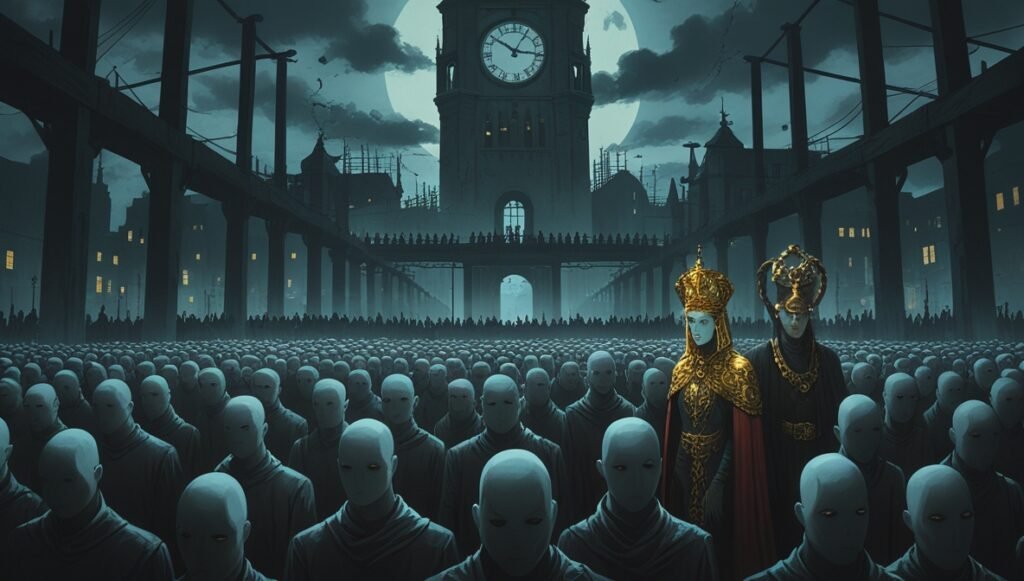
The first kind are the nameless masses—the mob. The second are those intoxicated by power. When the two unite, they become a grotesque alliance, plunging headlong into folly. Like the farce of the late Qing elite aligning with the fanatics of the Boxer Rebellion, or today’s disillusioned masses pouring their last pennies into cults that promise salvation. Think of the zealous goose squads cheering for their bunker-dwelling leaders, shouting slogans while their masters sip imported wine and toast to “sovereignty.”
This is no satire—it’s the mirror of reality. Not a joke, but the shadow of history. Not intentional malice, but the instinctual outflow of jungle logic. And not a fleeting misfortune, but one of the fundamental reasons why certain societies cannot cross the threshold of civilization.
You can still hear echoes from the primal past: naked primates sprinting across the wild, lions marking their territory, lone wolves wandering. The same instincts live in us—”the strong feast first,” “the weak bow and worship,” “envy anyone who dares to outshine me.” These are the original commandments carved into our flesh and culture.
And thus, a grotesque drama unfolds: if I can’t be a loyal servant, then let me reign supreme. “All or nothing” becomes the anthem of the spiritually bankrupt.
If life were to remain trapped in this binary—either bowing or ruling—it would differ little from death. But something remarkable happened across generations: the emergence of empathy. The ability to project oneself into another’s condition. This “other-regard” is the seed of civilization. Except for those obsessed with crushing all who outshine them, most people are not only willing—but wired—to prefer “shared dignity” over absolute dominance. A kind of unwritten ethic: “I have, you have, we all have.”
Human civilization has evolved from the chaos of “mob + brute power” to a tripolar order: Thought, Capital, Technology. Where once power devoured everything, it now competes with creativity, markets, and information.
Every system that expands power without restraint eventually suffers the brain drain of its best people. Every system that restrains power invites in minds, capital, and innovation. In one direction: collapse. In the other: ascent.
The trend is clear: places that limit power grow stronger. Places that fear competition grow weaker. Eventually, they lose even the qualification to compete.
This is the quiet judgment of history: It protects those who protect thinkers, creators, and doers. And it discards the places that cannot tolerate excellence.
In this world, if your system cannot tolerate those more brilliant than you, you’ll never truly rise. But if you create space for greatness—even greater than yourself—you won’t just survive, you’ll thrive.