
作者姓名:theseachen@gmail.com

Self-Directed Learning
Chat with Observation

Self-Directed Learning

The Path to Authentic Motivation and Growth Looking back on my journey, I’ve noticed a pattern: the deeper I went into formal education, the less motivated I felt; the more I embraced self-directed learning, the stronger my drive became. For example, I majored in architecture at university, fueled by an interest in psychology. Yet, when I entered the workforce, the realities of the industry drained my passion for architecture. In the five years since leaving university, I taught myself stock market investing, writing, social skills, and recently, relearned English. Not only did I acquire practical skills, but I also sustained a growing sense of motivation. This drive kept me persistent, created a cycle of input and output, and made learning genuinely enjoyable. Why is self-directed learning so powerful? Compared to formal education, it excels in several key ways: First, formal education’s one-size-fits-all approach overlooks individual differences. Schools measure success through grad

What is the purpose of education
Chat with Ridiculous

Education’s Lament and Rebirth

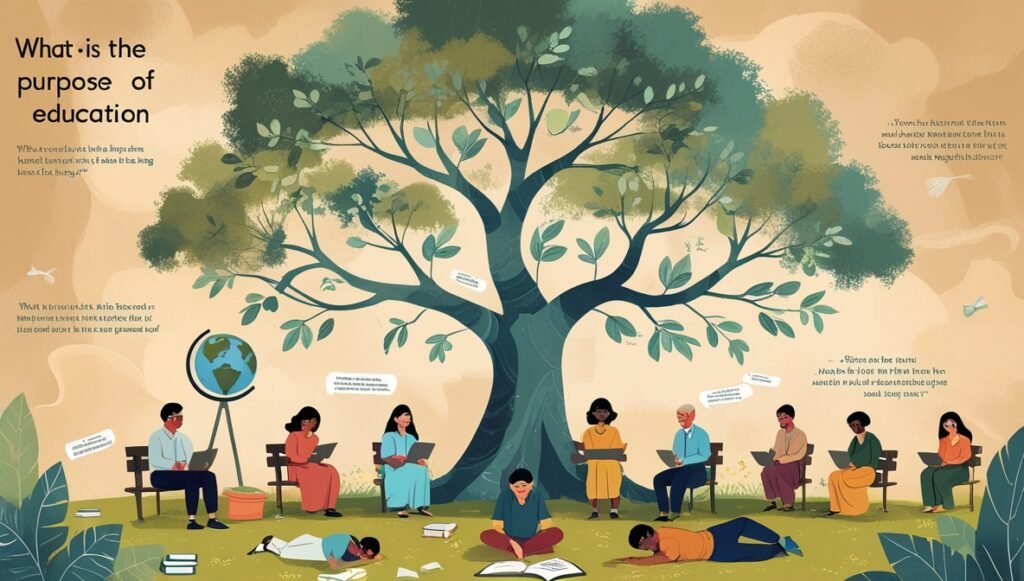
From Destruction to Transformation What is the purpose of education? To ignite the spark of curiosity in children, to fuel their creativity and inner drive, or to mold them into cogs in a machine, serving the utilitarian or authoritarian narratives of the powerful? Yet, in its prolonged distortion, the temple of education is riddled with holes, leaking from every corner, crushing the vitality and hope of the young. Our education system is gravely ill—its heart misaligned, its actions perverse. It is not our children who need educating, but we, the adults, who must learn anew. Natural Sciences: From Dragon-Slaying Swords to Kindling Stars Our mathematics and physics education has been reduced to a cage of formulas, problem sets, and exams. Young minds pour their energy into mastering “dragon-slaying swords,” only to find no dragons to slay, leaving behind a bubble of wasted intellect and stifled creativity. Why not kindle children’s passion for exploring the universe’s mysteries? Why n

Seeing Through Emptiness, Illuminating Essence
Chat with Ridiculous

Seeing Through Emptiness, Illuminating Essence

The way we observe, reflect, and approach the world shapes our actions and their outcomes. True creators transcend the tangible “form” to perceive the “emptiness”—an underlying order beyond appearances, interwoven with the tangible, weaving the invisible and visible into a meaningful whole. Most people fixate on “form”—the concrete shapes, data, or actions—overlooking the essence of “emptiness.” Yet, in certain realms, it is this “emptiness” that holds the key to mastery and brilliance. In spatial design, architects who focus solely on buildings and structures, their minds filled with bricks and beams, rarely create awe-inspiring works. Visionary designers first see “emptiness”—the flow of space, the tension of relationships, akin to the open courtyards of Chinese architecture or the serene voids of Tadao Ando’s light-filled designs. They treat “emptiness” as a hidden thread, organizing the tangible to find its rightful place, crafting a harmony of form and void. Mere piling of “form”

Confucius’ Flawed Assumptions
Chat with Ridiculous

Confucius’ Flawed Assumptions

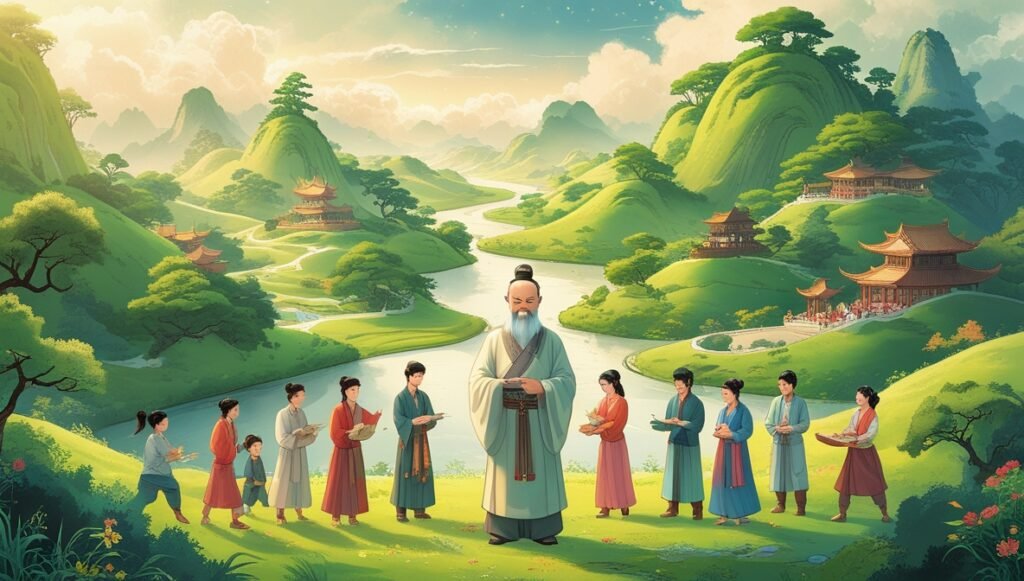
The Trap and Cycle of Two Millennia of Chinese Civilization Confucian thought, with its rigid hierarchy and utopian vision of “wise rulers and virtuous ministers,” has shaped China’s social landscape for two thousand years. Yet, these core assumptions not only misread the essence of humanity and society but also served as a gilded cloak for autocratic empires, fostering stagnation, moral distortion, and human calamity. By dissecting these fallacies and their consequences, we can tear away the illusion of “greatness, glory, and righteousness” to reveal the complex truths of human nature and history. Fallacy One: The Shackles of a Hierarchical Order Confucianism binds individuals to collective roles, prioritizing hierarchy and subordination as the bedrock of social order. This assumption stems from the realities of agrarian society: as humanity transitioned from the relative equality of primitive tribes to the stratified division of labor, societies divided into masters and slaves. Yet,

How to Become Time’s Enemy
Chat with Ridiculous

How to Become Time’s Enemy

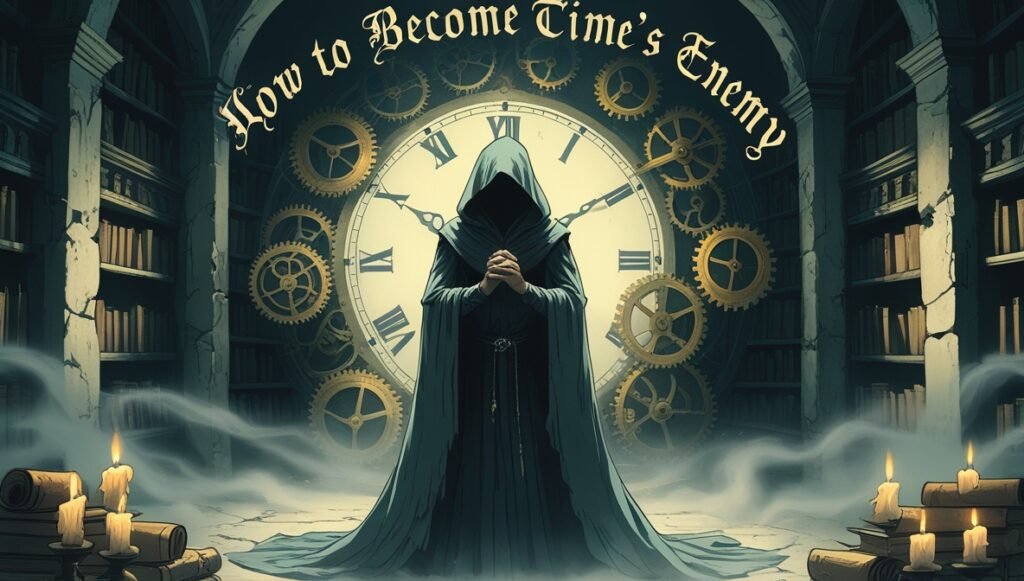
Time is a sieve, sifting out the fleeting and the frivolous. If you wish to become its enemy, fall in the clamor of crowds chase the glitter of shallow fame, and like a moth drawn to a flickering flame. Time is a lie detector, exposing deceit and pretense. If you wish to oppose it, dismiss sincerity as weakness , mock integrity as foolishand sway like a reed in whichever direction the wind blows. Time is a courtroom, passing judgment on fleeting power and extravagance. If you wish to defy time, obsess over trends, curry favor with all, and cling to faded glory like an aging lion guarding a crumbling throne. Time is an architect, building homes for the future. If you wish to stand against time, let the dazzle of distractions blind you, let chaos overrun your mind, and treat quiet reflection as a pointless ache, lost in endless restlessness. Time is an investor, safeguarding enduring value. If you wish to defy time,worship instant gratification, chase fleeting thrills, and gobble up fla

The Poison of Idealists, the Prison of Realists
Chat with Ridiculous

The Poison of Idealists, the Prison of Realists

Karl Marx, a “philosopher recluse” sustained by Engels’ handouts, sketched a utopian blueprint for human liberation in his smoke-filled study.He cast history as a saga of class struggle, envisioning a future of stateless, oppression-free abundance—a “communist paradise.” Yet, he overlooked a fundamental truth: utopias cannot be built upon human nature; they can only ensnare it. As Karl Popper sharply criticized, Marx’s so-called “scientific socialism” was never truly scientific. It was a prophetic doctrine cloaked in pseudo-scientific jargon — a blend of Hegelian dialectics, economic determinism, and historical inevitability. The result? A theory that could explain everything and predict nothing. A system immune to falsification, endlessly self-justifying. Every failure was merely “premature”; every criticism, a bourgeois illusion. And so, what began as a dream of emancipation turned into a machinery of domination. Not just Marx, but generations of people were suffocated by this grand

The Old Skin Beneath the New Garb
Chat with Ridiculous

The Old Skin Beneath the New Garb

The Liars of the Soviet Union The Soviet Union, inheriting the vast domains of Tsarist Russia, draped itself in the new garb of socialism, posing as a herald of the modern age. Yet, it was merely the old power dressed in a fresh costume, a faded dynasty in a new act. The so-called “proletarian paradise” was but a new palace for the elite, built on the crushed bones of freedom, dignity, and the people’s blood. Autocracy, tyranny, brutality, and greed did not perish with the fall of the Tsars; they simply waved a new “people’s” banner to deceive the world. Their fleeting glory was a conjurer’s trick, doomed to unravel. When the charade could no longer hold, the emperor’s new clothes were torn asunder, the stage collapsed, and the audience dispersed. Stalin’s dictatorship ended in ashes, and even the privileged caste he nurtured turned away from his corpse. Putin’s Russia, resurrecting the corpse of Tsarist and Soviet autocracy, breathes new life into the old spec

Why Has Chinese Civilization Been Trapped in a Historical Cycle?
Chat with Ridiculous

Why Has Chinese Civilization Been Trapped in a Historical Cycle?

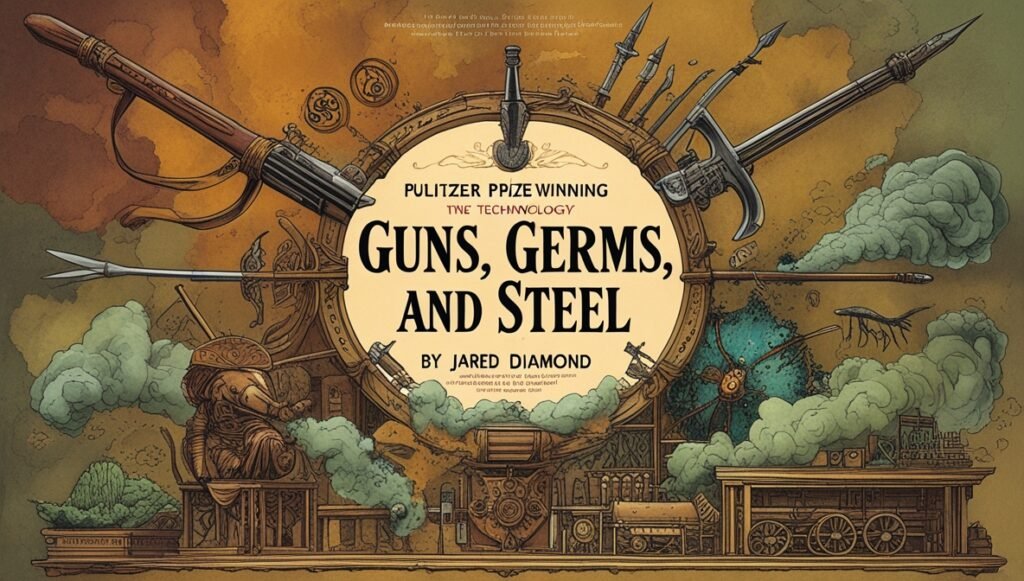
A Reflection from Imperial Rule to Modernity In 《Guns, Germs, and Steel》 Jared Diamond explores the trajectories of human civilization, emphasizing the decisive role of geography, agriculture, and disease. Yet, when it comes to how political systems shape civilizational progress—particularly how China’s centralized imperial rule led to centuries of stagnation and regression—his analysis is curiously restrained, almost evasive. Is this because political institutions are not the ultimate determinant on a grand scale? Or were certain critiques softened in the Chinese translation? This question itself is a critical thread in the dialogue of civilizations We must ask: If institutions, power structures, and intellectual ecosystems are not decisive, why did China—one of the earliest to transition to agrarian society, the earliest to forge a vast unified state—languish for the past 500 years, repeatedly faltering in the global tide of modernization? If the West’s rise was merely a fluke of th

The Rise, Fall, and Struggle of Chinese Civilization
Chat with Ridiculous

The Rise, Fall, and Struggle of Chinese Civilization

From the abdication of Yao, Shun, and Yu, Chinese civilization took root. In the Zhou and ChunQiu Wars periods, hundreds variety of thought contended, their ideas sparking like stars in the night. Qin unified power, burned books, and buried scholars, amassing the world’s tools of control yet impoverishing its people, collapsing in its second generation. Han embraced Confucian doctrines, restoring rules, its three-century reign laying the foundation of culture. Sui, Tang, and Song built on Han’s legacy, embracing diversity and reaching the zenith of prosperity. Yet Song suppressed martial valor for literary glory, its foundation skewed, its ideals waning, felled by foreign might—though truly undone by inner decay. Yuan’s brutal colonial rule sparked rebellion, ushering in Ming. Ming abolished the prime minister, exalting imperial power, chaining the minds of millions to one man’s will, and civilization slid into decline, shadowed by terror. The rebel Li Zicheng rose, and Emperor Chongz

The Trap and Escape of an Ah Q Civilization
Chat with Ridiculous

The Trap and Escape of an Ah Q Civilization

In a society where the individual is denied the freedom to exercise their will—yet the phrase “man is the sum of social relations” is endlessly repeated—collectivism is glorified, while individual vitality withers in silence. Everyone mocks Ah Q, unaware that they have already become him. Not only individuals, but entire organizations and nations have morphed into Ah Q-like entities—crippled products of a system that stifles life, surviving on self-deception and numb consolation. History echoes with resistance. Laozi rode westward out of Hangu Pass; the Seven Sages withdrew into the mountains; Tao Yuanming plucked chrysanthemums by the southern fence. In modern times, Chinese migrated to Nanyang, ventured into America, North Koreans fled starvation. These were not mere runaways, but acts of rebellion—an exodus of spirit from a system that strangles individual will. This model of society emerged thousands of years ago, and its divergence intensified over the last millennium. A single d

滚动至顶部