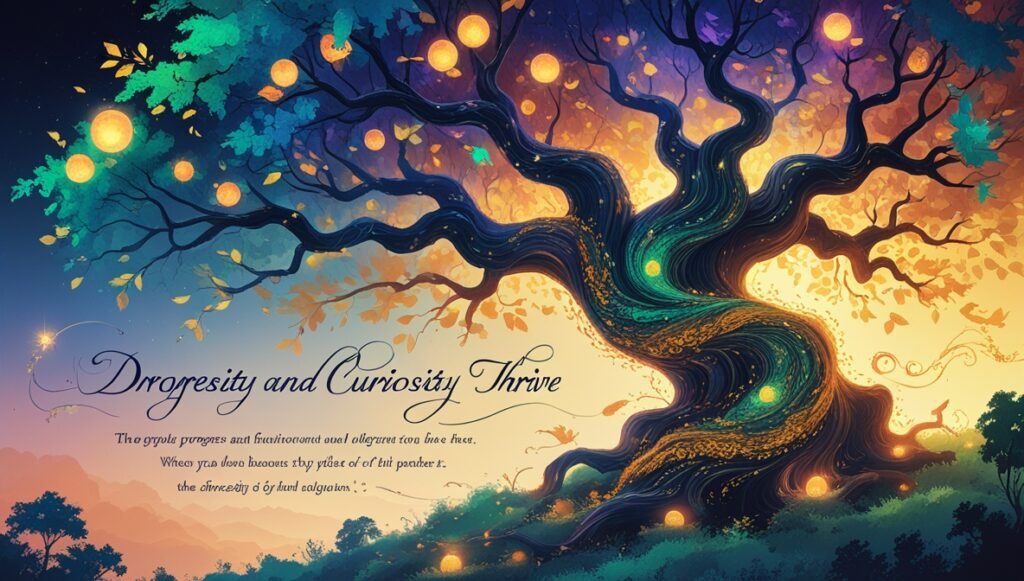
From Authoritarian Control to Civilizational Decay
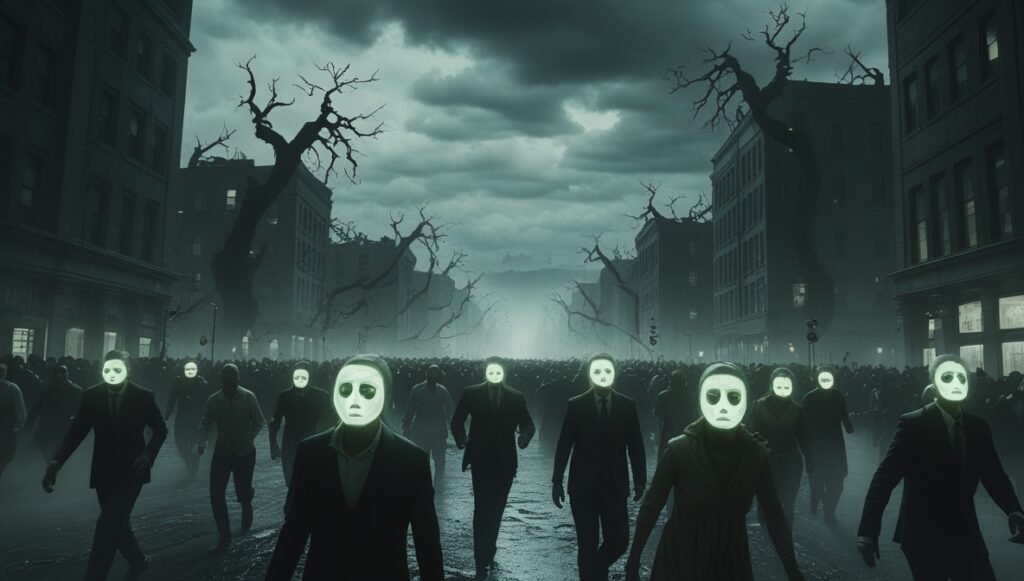
Autocracy is not the madness of a single individual but the systematic training of a society to lose its capacity for thought.
Violence is the whip, fear is the cage. Language becomes the tool of domestication. Through enforced uniformity of speech, millions are locked into a cage of singular consciousness. On this increasingly “purified” land, thought is silenced, diversity is crushed, and only one sound, one perspective, one permitted loyalty remains. This state mirrors an individual mind forcibly sealed shut, ultimately evolving into the collective mind of a society locked in darkness.
When individual thought no longer circulates freely, the collective mind begins to degenerate. The closed mind of a ruler is transmitted through the machinery of violence and the bureaucracy of obedience, and replicated in millions of followers. But this is not the victory of social unity—it is the beginning of spiritual death.
Once the collective mind is sealed, it is marked by rigid cognition, emotional judgments, instinct-driven decisions, and decaying mechanisms. The group no longer explores but obeys; it no longer questions but repeats; it no longer opens but cowers in fear. The path of evolution reverses: instead of survival of the fittest, the most obtuse, the most blindly loyal, the most submissive are trusted and favored by the closed system.
Thus, a civilizational trap of “reverse evolution and reverse selection” emerges: the most orthodox rise, the most obedient proliferate, and the most unthinking rule. The branches of civilization wither, the vibrancy of life is drained, leaving only an institutional husk swaying in the wind. A survival logic of “singular centrality and supreme authority” takes hold, giving rise to an institutional personality that is anti-civilization, anti-diversity, and anti-life.
The society shaped by this closed collective mind appears orderly but is suffused with deathly stagnation; it seems grandiose but is built on piles of bones; it sounds righteous but spews distorted falsehoods. In this civilizational climate, ears are filled with clamor, eyes are veiled by illusions, and minds are stuffed with absurdities. The flower of thought cannot bloom—only the weeds of ignorance grow rampant. The great scientific maxim, “I don’t know,”—the question of the open-minded, the light of the evolving—has no place in the lexicon of the obedient.
Without the soil of doubt, the fruits of enlightenment cannot grow. Without the voice of dissent, civilization cannot leap forward. Trapped in the delusion of being the “center of the world,” the collective descends into a foolish cycle of narcissism, isolation, and self-bondage. It is ignorant of its own ignorance and intolerant of others’ knowledge of the world’s vastness. It surrenders its fate to a deified mortal and pins its hopes on a fabricated illusion, ultimately collapsing into a civilizational deadlock where individual thought withers and societal vitality vanishes
Thus, suffering arrives uninvited, descending upon every household. A toxic blend of ignorance and fear constructs an anti-human institutional cycle—a loop where all hope is formatted into submission to a “singular deity,” all talent is tamed into cogs for the system, and all thought is consumed by self-censorship and feigned contentment.
The greatness of civilization lies not in uniformity and control but in difference and exploration; the evolution of life depends not on obedience and fear but on curiosity and doubt. A society that forbids saying “I don’t know” cannot evolve. A civilization that carves a singular truth into iron law is destined for spiritual death.