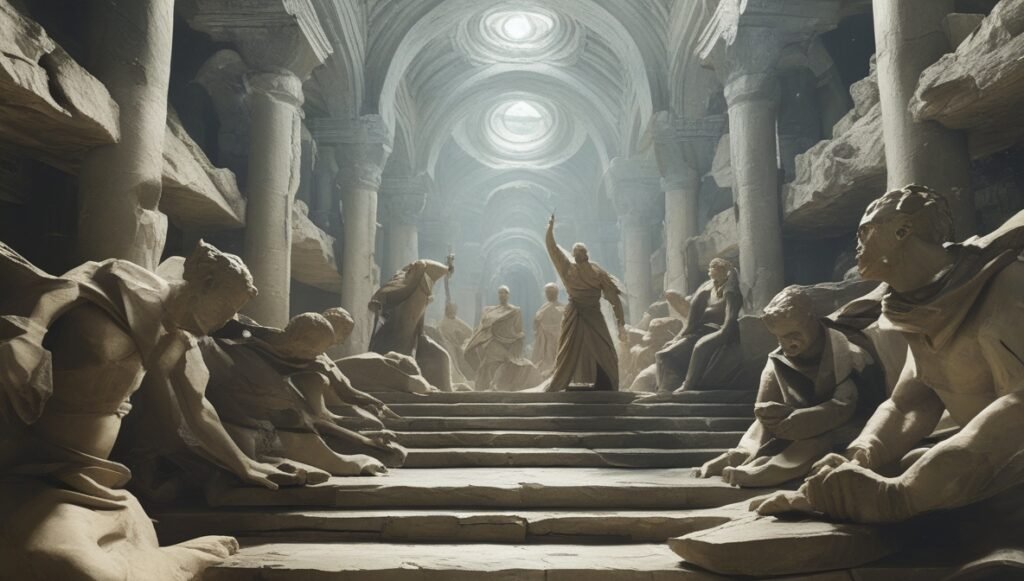
In a society where the individual is denied the freedom to exercise their will—yet the phrase “man is the sum of social relations” is endlessly repeated—collectivism is glorified, while individual vitality withers in silence. Everyone mocks Ah Q, unaware that they have already become him. Not only individuals, but entire organizations and nations have morphed into Ah Q-like entities—crippled products of a system that stifles life, surviving on self-deception and numb consolation.
History echoes with resistance. Laozi rode westward out of Hangu Pass; the Seven Sages withdrew into the mountains; Tao Yuanming plucked chrysanthemums by the southern fence. In modern times, Chinese migrated to Nanyang, ventured into America, North Koreans fled starvation. These were not mere runaways, but acts of rebellion—an exodus of spirit from a system that strangles individual will.
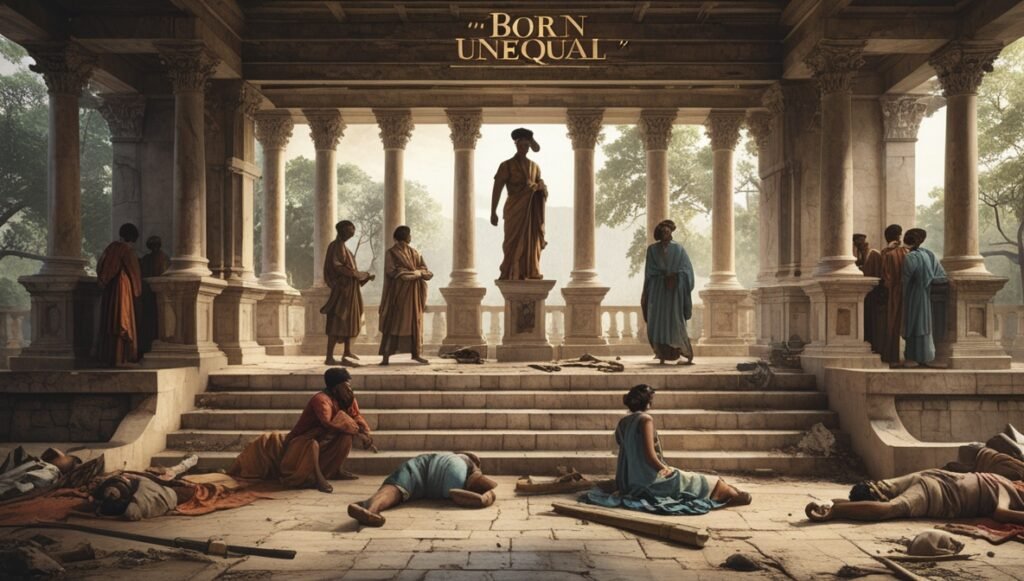
This model of society emerged thousands of years ago, and its divergence intensified over the last millennium. A single deviation in moral principle—equality by birth VS . hierarchy by tradition—produced drastically different civilizational outcomes. The former birthed freedom, contracts, rights; the latter nursed hierarchy, submission, sacrifice.
“Born unequal” nurtured structural injustice: the superiority of the few, the subjugation of the many, the monopolization of resources, the hoarding of knowledge, and the silencing of truth. It birthed arrogance at the top and anxiety at the bottom, grandeur in the palace and corpses on the roadside. This entire edifice is dressed up with lofty slogans: “collective good,” “social harmony,” “national pride.” But it’s akin to a rapist demanding the victim shout in pleasure—vulgar and grotesque.
Such systems inevitably implode. Their collapse is both a defiant return of life’s will and a corrective gesture from the greater evolutionary order.
Yet what follows is uncertain: a new order’s dawn or another cycle’s birth. It might awaken reverence for free will, forging a civilization that honors individuals and unleashes creation. Or it may slip into another hierarchy, cloaked in “new tech,” “new rhetoric,” “new systems”—same chains, fresh paint.
At its core, this isn’t just a critique of one regime or people but a reckoning with a social model that defies life’s essence. If individual will remains shackled, civilization’s tree will wither. True progress isn’t towering skyscrapers or soaring GDP—it’s every person living authentically, un-deceived, un-oppressed, simply themselves.